I think church visitor cards are among the most underrated tools for helping guests connect with your church.
Endless details. Married? Single? How many kids? What’s your age? Forms can quickly become exhausting.
A visitor card needs a clear purpose: give guests a simple way to share their contact details so your church can thank them, answer questions and help them take a next step.
We used these cards extensively at C3 Church Hepburn Heights during my years of pastoring. You can use a simple visitor card or a broader church connection card.
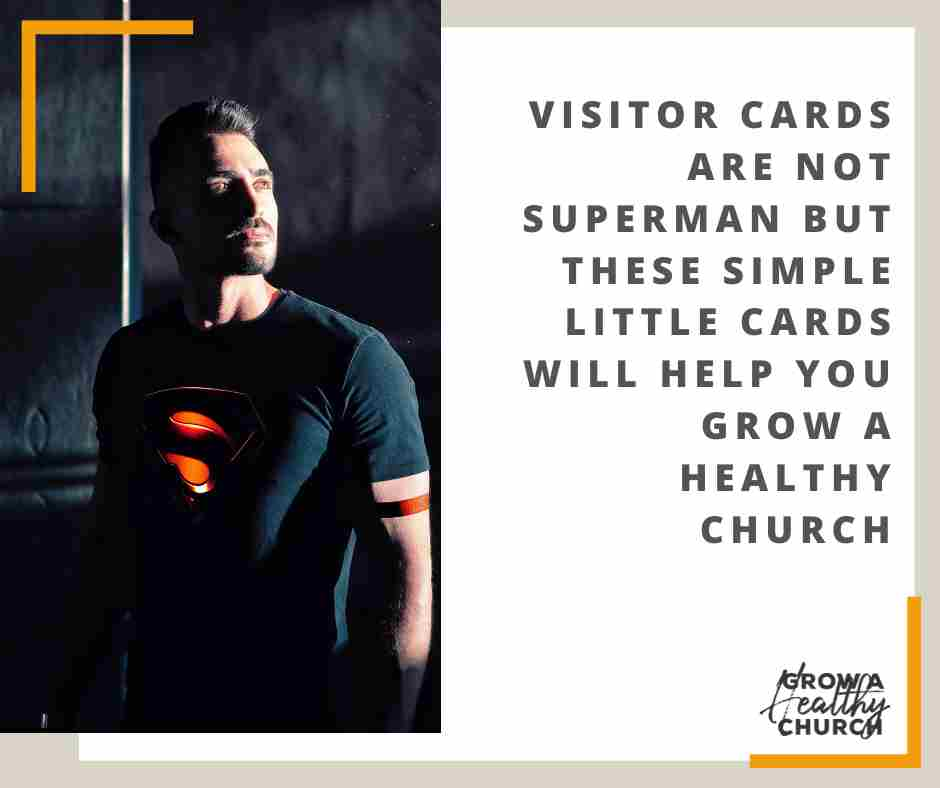
These cards are more powerful than a speeding locomotive, able to leap tall buildings in a single bound … hang on! Well, maybe they’re not Superman, but those simple little cards can help you connect with people. Why do churches overlook them?
Key Takeaways
- Make sharing contact details a clear, friendly invitation.
- Keep the focus on hospitality and relationships.
- Use a simple card that guests can understand quickly.
- Prepare your team to welcome people and explain what happens next.
- Follow up thoughtfully through a channel the guest is comfortable using.
1. Fear
People don’t use church visitor cards because they are afraid of asking people for their contact details.
The fear of the church not growing is conquered by the intimidation of asking for someone’s address and phone number.
We are terrified of people saying No.
Rejection scales our walls and holds us captive.
2. Neglectful hospitality
Churches don’t use church visitor cards because they lack an emphasis on hospitality. Their focus is more on themselves than on the people they are meant to be serving which are their visitors, their guests.
Hospitality calls us to love the stranger. Churches with loving hospitality make strangers feel welcome. Now not in an overbearing awkward way but with sensitive and caring ways.
Poor hospitality makes it harder for people to connect with a church.
3. Instant coffee
OK, now I might be going a bit far here but stay with me.
When I see a church serving instant coffee I think it indicates that they see themselves as a family enjoying each other’s company.
It’s kinda like when your elderly grandparents say “I bought this expensive Moccona just for you.” You quietly sigh and think, “well it’s my family” and reassuringly tell them “That’s great grandma, thank you!”
However, when your local barista starts bringing out the Maxwell House then you know he really doesn’t care.
Churches are families but they are so much more than families. They are created to go beyond themselves and serve their community.
My point is to think about the experience you offer people who are new to your church, rather than only what feels comfortable to those already inside.

4. Blind guides
When leaders lack vision to reach their community they are blind guides stumbling over offences and minuscule matters.
They lead their churches into small visions that don’t ruffle the status quo.
Ultimately they neglect the outsiders and have never considered wielding an instrument of growth like a visitor connect card.
Your Church Visitor Connect Card must be simple. Simplifying complex things is the hallmark of genuine leadership.
5. Too spiritual
Whoa, John. No way. Too spiritual. Are you kidding? How can being spiritually alive be a reason to not use church visitor cards?
Ever heard of being so heavenly minded that you are of no earthly use?
Well, some churches pray and pray and pray and fast and pray and fast and pray (you get the idea) for Jesus to bring new people and when the Lord answers their prayers and sends new people, they don’t get their details and of course can’t follow up the people the Lord has sent to them.
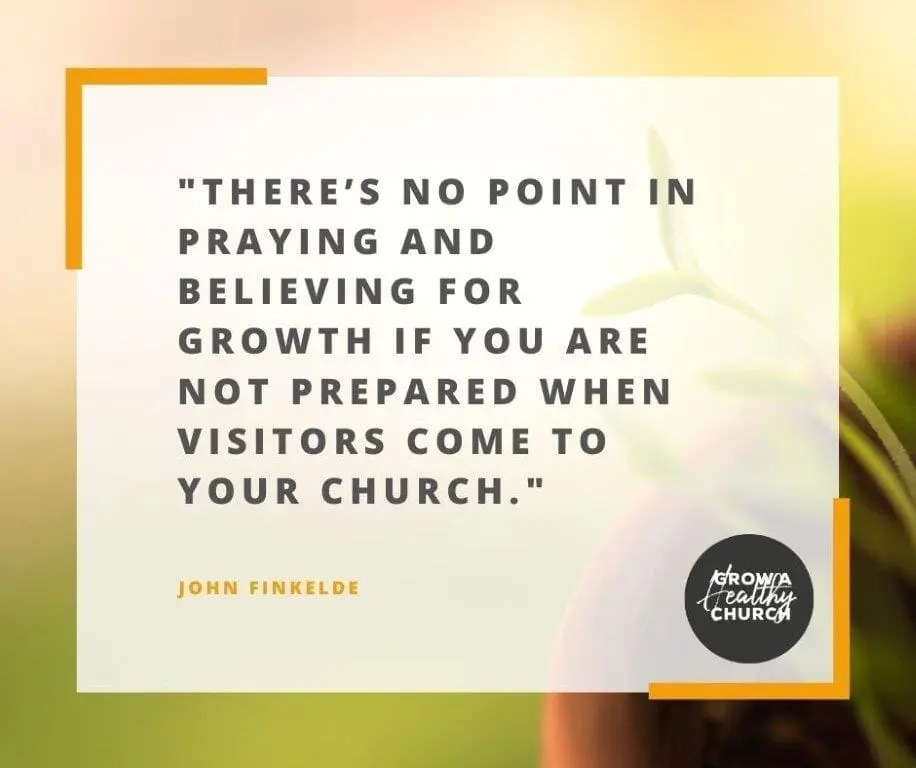
There’s no point in praying and believing if you are not prepared when they come to your church.
How can you make your visitor cards work for you?
I place a high value on the first 15 minutes after the service. It is an important opportunity to meet visitors and begin a relationship.
A clear pathway for visitors to connect and return helps your team know what to do next.
Think of the range of visitors coming to your church.
They range from people who don’t want any connection to those who are longing to be part of your church. Therefore it’s vital to cater for everyone in this wide spectrum.
Set up a guest lounge
Set up an area in your foyer for a guest lounge. Never, please, never take people into a separate room.
They will feel awkward, isolated and anxious. Instead set up a guest lounge in the place where people normally gather after your service. It doesn’t have to be super flash but make sure there are some top-shelf refreshments and amiable hosts.
Not all your visitors will go there, and that’s OK. Make it a friendly invitation and an easy opportunity to meet your team and pastor.
Get their contact details
Now here’s THE key. The pastor and all volunteers involved with visitors need to carry a pen and a few church visitor cards.
After you connect with a visitor and the conversation comes to a natural end, offer a card and ask whether they would like the church to stay in touch. Explain how the details will be used.
Let people choose whether to share their details. Ask for what your follow-up needs, such as their name and preferred way to be contacted, and respect those who decline.
One tip: use the church’s card or approved digital process, rather than keeping guest details in a volunteer’s personal phone. Make it clear that this is a church welcome process.
What do you do with the cards?
The card is the beginning of the process. Make sure someone is responsible for receiving it and arranging the follow-up. My church visitor follow-up scripts for the first 30 days give your team practical wording for each next step.
If a guest has agreed to contact by text, a thank-you within 24 hours is a useful starting point. A later invitation can help them know they are welcome to return.
A courtesy call is another option when the guest is comfortable with a phone conversation.
A handwritten postcard can be a personal touch when you have the details and the guest is happy to receive it.
A well-designed email can provide links to the church’s website and social media accounts. Choose the contact that suits the guest rather than using every channel at once.
Don’t be THAT church
In my consulting, I’ve encountered churches that overlook visitor cards while wondering why guests don’t return.
I want churches to prepare for the people they pray will come, and to welcome them with care.
Frequently asked questions about church visitor cards
What is the purpose of a church visitor card?
I use it to give guests a simple way to share their details and ask for contact from the church. The purpose is to help a relationship continue after the service.
What if a visitor doesn’t want to fill one in?
Respect their decision and keep welcoming them. The invitation should help people connect, not make them feel pressured.
How much information should the card ask for?
Keep it simple. Ask for the information your team needs for the contact the guest has agreed to, rather than collecting a long list of personal details.
Do we need a separate room for guests?
I prefer a welcoming area near where people already gather after the service. Friendly hosts and good refreshments matter more than an elaborate setup.
What happens after someone completes a card?
Give a designated person responsibility for the next step. Thank the guest, answer any questions and explain how they can connect further, using the contact method they are comfortable with.